The Theory of Evolution by Natural Selection

Evolution by natural selection is the unifying theory of biology, explaining the diversity of life on Earth. Proposed independently by Charles Darwin and Alfred Russel Wallace in the 19th century, it remains one of science’s most robust and well-evidenced theories, supported by discoveries from genetics, paleontology, and comparative anatomy.

The Theory of Evolution by Natural Selection
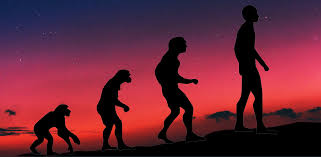
The Theory of Evolution

The theory rests on simple observations with profound implications. First, individuals within species vary in their traits. No two individuals are exactly identical. Second, many of these variations are heritable, passed from parents to offspring. Third, more offspring are produced than can possibly survive given limited resources. This overproduction creates competition for survival.

Natural selection follows logically. Individuals with traits better suited to their environment are more likely to survive and reproduce, passing those advantageous traits to offspring. Over generations, favorable traits become more common in the population, while unfavorable ones diminish. The population gradually becomes better adapted to its environment.

Importantly, evolution acts on populations, not individuals. Individuals do not evolve; they are born with traits inherited from parents. Populations evolve as the proportion of different traits changes over generations. This is why evolution is often defined as change in allele frequencies in a population over time.

Adaptation results from this process. Complex structures like the eye, once used as argument against evolution, actually show clear evolutionary history. Eyes evolved independently multiple times, from simple light-sensitive patches to complex camera eyes, with intermediate forms still existing in living species. Each step provided survival advantage.

Fossil record documents evolution’s history. Transitional forms show gradual change over time. Archaeopteryx links dinosaurs and birds. Tiktaalik bridges fish and land vertebrates. Whale ancestors walked on land. These fossils, predicted by evolutionary theory before discovery, provide powerful confirmation.

Comparative anatomy reveals evolutionary relationships. Structures with different functions but similar underlying form—like human arm, whale flipper, bat wing—indicate common ancestry. Vestigial structures like human appendix or whale pelvic bones, reduced and nonfunctional, reflect evolutionary history rather than intelligent design.

Molecular biology provides overwhelming evidence. DNA sequences show clear patterns of relatedness. Humans share about 98% of DNA with chimpanzees, our closest living relatives. Genetic differences accumulate over time, allowing molecular clocks to estimate when species diverged. These genetic relationships match those inferred from anatomy and fossils.

Observed evolution happens constantly. Bacteria evolve antibiotic resistance. Insects evolve pesticide resistance. Darwin’s finches evolve beak shapes in response to drought. These observable changes demonstrate evolution occurring in real time, confirming the process that produces larger-scale patterns over longer periods.

Speciation—the formation of new species—occurs when populations become reproductively isolated. Geographic separation allows independent evolution. If separated long enough, populations may become unable to interbreed even if reunited. The 13 finch species of Galápagos descended from single ancestral species through this process.

Common misconception holds that evolution is “just a theory.” In science, theory means well-tested, widely accepted explanation supported by extensive evidence, not mere speculation. Gravity is “just a theory,” as is germ theory of disease. Evolution’s theoretical status reflects its strength, not weakness.

Another misconception concerns purpose. Evolution has no goal or direction. It does not produce “higher” or “more advanced” organisms, only organisms adapted to their environments. Humans are not evolution’s pinnacle; we are simply one branch on vast tree of life, adapted to our particular niche.

Evolution explains both unity and diversity of life. Unity—common genetic code, similar cellular structures—reflects common ancestry. Diversity—millions of species filling countless ecological niches—reflects adaptation to different environments through natural selection. Both aspects follow from same theory.

Understanding evolution is essential for modern biology, medicine, and agriculture. Antibiotic resistance, vaccine development, crop breeding, and conservation all depend on evolutionary principles. Evolution is not abstract concept but practical tool for addressing real-world challenges.


How the Internet Works

The internet has become as essential as electricity and running water, yet most people have little understanding of how it actually works. This invisible infrastructure that connects billions of devices globally is remarkably elegant in its design, built on principles of redundancy, decentralization, and standardized protocols that allow completely different systems to communicate seamlessly.

How the Internet Works

Internet

At its core, the internet is simply a network of networks. Millions of private, public, academic, business, and government networks worldwide connect through common technical standards. No single entity owns or controls it. Instead, voluntary agreements and shared protocols enable global connectivity. This decentralization is intentional, designed to survive nuclear attack during its Cold War origins but proving resilient for entirely different reasons.

The foundation is the Internet Protocol Suite, commonly called TCP/IP. Transmission Control Protocol (TCP) breaks data into packets, numbers them, and ensures complete, error-free delivery. Internet Protocol (IP) addresses each packet with source and destination information, routing it through the network. Think of TCP as creating the letter and IP as addressing the envelope. This separation allows flexibility; packets can take different routes and be reassembled at destination.

IP addresses are fundamental. Every device connected to the internet has unique numerical identifier, like 192.168.1.1. The current system, IPv4, offers about 4.3 billion addresses, insufficient for today’s connected world. IPv6, with 340 undecillion addresses, is gradually replacing it. Domain Name System (DNS) translates human-readable names like google.com into these numerical addresses, functioning as internet’s phonebook.

Routers direct traffic. These specialized computers examine packet destinations and forward them toward destination. The internet’s redundancy means multiple paths exist between any two points. If one router fails or connection degrades, packets automatically route around problem. This resilience is why internet remains functional even when large portions are damaged.

Data travels through physical infrastructure. Undersea cables crossing oceans carry most international traffic. Fiber optic lines using light pulses transmit data at incredible speeds. Copper lines, cellular towers, and satellites complete the network. The “cloud” is not ethereal; it consists of massive data centers filled with servers storing and processing data.

World Wide Web, often confused with internet itself, is actually application running on internet. Web browsers use HTTP/HTTPS protocols to request web pages from servers. Email uses SMTP, POP, and IMAP. File transfer uses FTP. Streaming uses various protocols. All ride on same underlying internet infrastructure.

Packet switching is key insight. Rather than establishing dedicated connection like old telephone system, internet breaks everything into packets sent independently. This allows multiple users to share infrastructure efficiently. If congestion occurs, packets wait or reroute. Network feels instantaneous because this all happens in milliseconds.

Security operates at multiple levels. HTTPS encrypts web traffic. Firewalls block unauthorized access. VPNs create encrypted tunnels. Yet internet was designed for openness, not security, which is why phishing, malware, and cyberattacks remain constant challenges. Security is ongoing arms race.

Internet governance involves multiple organizations. ICANN manages domain names and IP addresses. IETF develops technical standards. National governments regulate within borders. No global internet government exists, reflecting original design philosophy. This creates tensions as different countries assert sovereignty over “their” internet.

The internet’s magic is that it works everywhere, on any device, using common standards. A laptop in rural village can communicate with server in global data center because both follow same protocols. This universal interoperability, achieved through voluntary cooperation, is humanity’s greatest technological achievement, enabling global communication, commerce, and knowledge sharing that previous generations could not imagine.

The Foundation of Health, Sleep

Sleep is the most undervalued pillar of human health. In a culture that often celebrates hustle and equates sleep with laziness, we have forgotten that every major system in the body depends on adequate rest. The science is unequivocal: chronic sleep deprivation is associated with increased risk of obesity, heart disease, diabetes, dementia, and premature death. Understanding sleep is understanding health itself.

Sleep: The Foundation of Health

The sleep cycle consists of multiple stages that repeat throughout the night. Non-REM sleep includes light sleep and deep sleep, the latter being essential for physical restoration, tissue repair, and immune function. REM sleep, during which most dreaming occurs, is critical for emotional regulation, memory consolidation, and learning. Both types are necessary, and disrupting either has consequences.

Deep sleep is when the brain clears waste products, including beta-amyloid plaques associated with Alzheimer’s disease. The glymphatic system, active primarily during deep sleep, flushes toxins from the brain. This nightly housekeeping may be one reason sleep deprivation accelerates cognitive decline. Skimping on sleep literally allows waste to accumulate in the brain.

Memory consolidation depends on sleep. During the day, the brain forms temporary connections. At night, particularly during deep sleep and REM, it replays and strengthens important memories while pruning irrelevant ones. Students who sacrifice sleep to study are counterproductively impairing their ability to retain what they learned. Sleep after learning is as important as the learning itself.

Hormonal regulation is sleep-dependent. Growth hormone, essential for tissue repair and muscle building, is primarily released during deep sleep. Cortisol, the stress hormone, follows a circadian rhythm that sleep disruption can dysregulate. Leptin and ghrelin, which control hunger and fullness, become imbalanced with sleep loss, increasing appetite and cravings for high-calorie foods. This is why tired people overeat and gain weight.

Immune function suffers without sleep. Studies show that people sleeping less than seven hours are nearly three times more likely to develop a cold when exposed to the virus. Sleep deprivation reduces production of protective cytokines and infection-fighting antibodies. During illness, the body demands more sleep because fighting infection requires it.

Cardiovascular health depends on rest. During deep sleep, heart rate and blood pressure drop, giving the cardiovascular system essential recovery time. Chronic short sleep is linked to hypertension, heart attack, and stroke. The heart cannot rest adequately if you never do.

The recommended sleep duration for adults is seven to nine hours per night. Yet nearly one-third of adults regularly sleep less than seven hours. This collective sleep debt has public health consequences, contributing to epidemics of obesity, diabetes, and heart disease. Sleep is not optional; it is biological necessity.

Sleep hygiene matters. Consistency—same bedtime and wake time, even weekends—strengthens circadian rhythms. Darkness matters: blue light from screens suppresses melatonin production. Temperature matters: cooler environments promote sleep. Caffeine late in the day, alcohol before bed (which fragments sleep), and large meals close to bedtime all disrupt rest.

Sleep disorders are common and underdiagnosed. Sleep apnea, affecting millions, causes breathing to stop repeatedly during sleep, fragmenting rest and stressing the cardiovascular system. Insomnia, whether trouble falling asleep or staying asleep, affects many. Restless leg syndrome and narcolepsy are less common but significant. Treatment exists, but only if the problem is identified.

Napping can supplement but not replace nighttime sleep. Short naps (10-20 minutes) can boost alertness without causing sleep inertia. Longer naps enter deep sleep, making waking difficult, and can interfere with nighttime sleep if taken late in the day. Napping is tool, not solution for chronic sleep deprivation.

The cultural dismissal of sleep is dangerous. We would not praise someone for never eating or never exercising, yet we admire those who “survive on four hours.” This must change. Sleep is not wasted time; it is invested time, essential for everything that matters when awake. Prioritizing sleep is not laziness; it is wisdom.

The Smartphone: The Universal Device That Ate the World

The Smartphone: The Universal Device That Ate the World

The smartphone is arguably the most transformative gadget in human history. In just over a decade, it has become the universal device—camera, map, bank, library, communication hub, entertainment center, and personal assistant all rolled into a slab of glass and metal that fits in a pocket. Understanding the smartphone is understanding how technology reshapes daily existence.

The modern smartphone is a marvel of miniaturization. The processor in your pocket has more computing power than the systems that guided astronauts to the moon. The camera system contains multiple lenses, sophisticated sensors, and computational photography algorithms that outperform professional equipment from just a few years ago. The battery, slim and sealed, powers this supercomputer through a day of intensive use. All of this is mass-produced at price points that make it accessible to billions.

The smartphone’s dominance stems from its role as a platform. It is not a single-purpose device but a gateway to an ecosystem of apps and services. Need directions? Open maps. Want to capture a moment? Launch the camera. Bored? Stream video, play games, or scroll social media. Working? Answer email, edit documents, join video calls. Each function that once required a separate gadget—GPS, camera, MP3 player, gaming device, newspaper, calculator—is now a free or cheap app.

The camera has become perhaps the most important feature. Smartphone photography has democratized image-making, putting powerful creative tools in every hand. Computational photography, where software enhances hardware, enables features like portrait mode, night sight, and astrophotography that were impossible in dedicated cameras. Social media platforms optimized for visual content have made photography a universal form of communication.

The screen is the primary interface. Display technology has evolved from basic LCDs to vibrant OLEDs with high refresh rates, HDR support, and always-on functionality. The screen is where we consume, create, and connect. Its size and quality define much of the user experience. The trend toward edge-to-edge displays has eliminated bezels, making screens larger without increasing device size.

Yet the smartphone’s ubiquity raises concerns. The average user checks their phone over 100 times daily. Notifications fragment attention, pulling us out of the present moment. Social media apps designed for engagement rather than well-being can undermine mental health. The constant connectivity blurs boundaries between work and life, leaving many feeling never truly off-duty.

Privacy is another concern. Smartphones are tracking devices by design, generating constant data about location, activity, and behavior. This data fuels the attention economy, enabling targeted advertising but also creating surveillance capabilities unprecedented in human history. Users are increasingly aware that the device in their pocket knows more about them than any person ever could.

Environmental impact is significant. Smartphone production requires rare earth minerals often mined under problematic conditions. Manufacturing generates substantial carbon emissions. The typical upgrade cycle of two to three years creates massive electronic waste. Efforts toward modular, repairable, and sustainable designs remain niche.

The smartphone market has matured. Innovation now focuses on incremental improvements: better cameras, faster processors, longer battery life. Foldable screens represent the most significant form factor change in years, offering tablet-sized displays in pocketable devices. But the fundamental concept—a touchscreen computer that fits in your hand—remains unchanged.

The smartphone’s future involves deeper integration with our lives. Augmented reality will overlay digital information onto the physical world. AI assistants will become more proactive and capable. Health sensors will monitor more metrics. The device will become less a tool we actively use and more an ambient presence that anticipates needs.

For all its complexities and contradictions, the smartphone remains the defining gadget of our era. It is the window through which billions experience the digital world, the tool that connects us to information and each other, and the device that, for better or worse, shapes how we live.

The Algorithmic Society: How Code Shapes Our Lives

The Algorithmic Society: How Code Shapes Our Lives

We live in an age where algorithms silently govern vast swaths of human experience. These invisible lines of code determine what news we see, what products we buy, what music we hear, even whom we date or whether our loan application is approved. The algorithmic society has arrived, and its influence grows deeper with each passing year.

At its most basic, an algorithm is simply a set of instructions for solving a problem or completing a task. But when scaled across billions of users and fed endless streams of data, these instructions become something far more powerful: they become arbiters of information, gatekeepers of opportunity, and architects of human behavior. The recommendation engines on YouTube, TikTok, and Netflix don’t merely suggest content; they actively shape cultural consumption patterns, sometimes driving entire genres of music or video into prominence through sheer algorithmic amplification.

The Algorithmic Society: How Code Shapes Our Lives

The mechanisms behind this are sophisticated. Machine learning models analyze your past behavior, compare it to millions of others, and predict what you will likely engage with next. Every click, every pause, every skip becomes data that refines the model’s accuracy. The system optimizes for one thing above all else: engagement. The longer you stay, the more data is generated, the more ads are shown, the more money is made. This creates a feedback loop where algorithms progressively narrow your experience, showing you more of what has already captured your attention.

This personalization has profound societal consequences. Political campaigns now micro-target voters with precisely tailored messages, sometimes showing different, even contradictory, positions to different demographics. The filter bubble effect means citizens of the same nation can inhabit entirely different information ecosystems, undermining shared reality and fueling polarization. Algorithms optimized for outrage often promote divisive content because negative emotions drive engagement more reliably than positive ones.

The workplace has been similarly transformed. Algorithmic management systems now schedule shifts, monitor productivity, and even terminate workers without human intervention. Delivery drivers are routed, timed, and evaluated by code. Gig economy platforms use algorithms to match workers with tasks, set prices, and determine pay, often with opaque criteria that workers cannot challenge or even understand.

Yet algorithms are not neutral. They inherit the biases of their creators and their training data. A hiring algorithm trained on historical data will learn past discriminatory patterns. A predictive policing algorithm trained on arrest data will perpetuate over-policing of minority neighborhoods. These systems codify inequality, making bias scalable and automated.

The challenge of the algorithmic society is not merely technical but deeply human. We must ask who designs these systems, what values they encode, and how they can be made accountable. Transparency is essential, but proprietary secrets often shield algorithms from scrutiny. Regulation lags behind innovation, leaving citizens vulnerable to systems they cannot see and do not understand.

The path forward requires algorithmic literacy as a basic life skill. Citizens must understand that their digital experiences are curated, not natural. They must recognize that algorithms have biases and blind spots. They must demand explainability and recourse when automated decisions affect their lives. The algorithmic society is not inherently oppressive, but without vigilance, it will optimize for everything except human flourishing.